I’ve just come back from a week in the Bordeaux region. Bordeaux is most famous for the Left Bank of the Garonne river, which includes the big name appellations of the Médoc: Saint-Estèphe, Pauillac, Saint-Julien and Margaux. These sit on gravel and stony soils which suit Cabernet Sauvignon, so blends are typically higher in Cab Sav than Merlot.
We were on the Right Bank. It has far more clay which suits Merlot, so most of the wines are Merlot-dominant. The best known appellation is Saint-Emilion, and there are big name châteaux here too: Pavie, Figeac, Angélus, Ausone, Cheval Blanc. Saint-Emilion itself is a charming town, with medieval cobbled streets, incredible views across rooftops and vineyards, and more wine bars, wine merchants and wine-focused restaurants that you’d ever need. A couple of quick recommendations: L’Envers du Décor for lunch and Vignobles et Châteaux wine merchant for tasting and buying (and in my case ogling the Château Ausone from the year I was born).
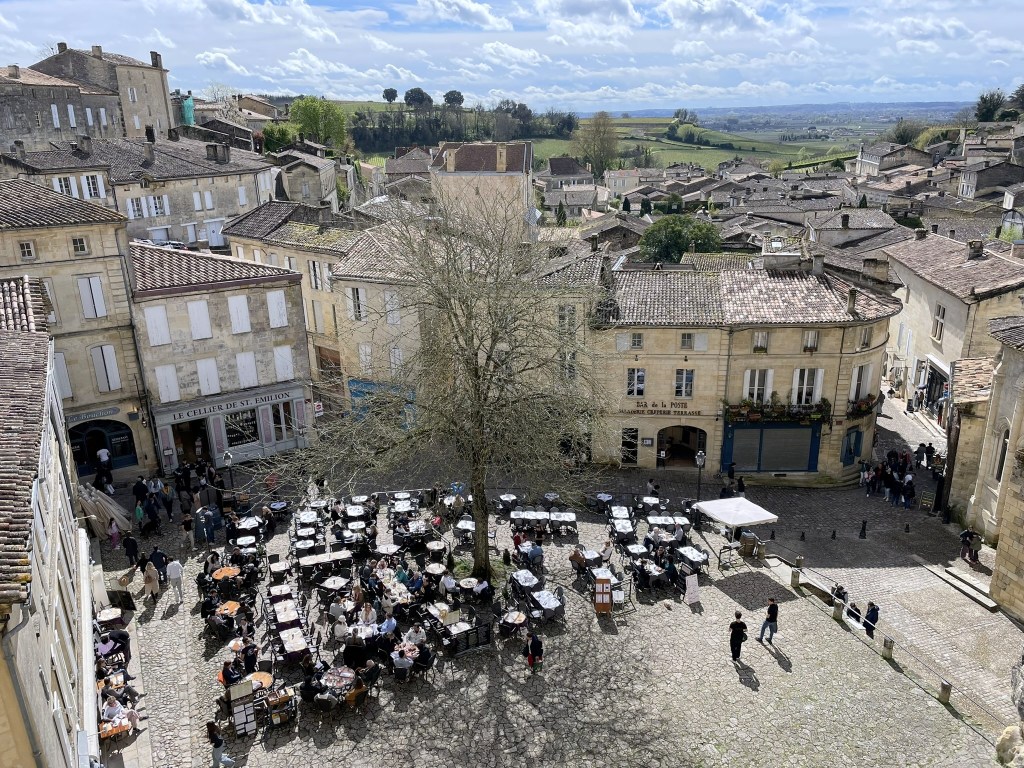
I was struck by the level of excitement and hype around the First Growths. Saint-Emilion has a classification system with Premier Grand Cru Classé and Grand Cru Classé awarded every 10 years. The 2012 classification was controversial, with some chateaux feeling unfairly overlooked, and others considered unfairly promoted. Three Premiers Grands Crus Classés left before the 2022 classification was released: Angélus, Ausone and Cheval Blanc. They are prestigious enough not to need the classification. Château Figeac and Château Pavie are the two remaining Premiers Grand Cru Classés A.
Wine tourism is very important in this region. Many of the Saint-Emilion chateaux are beautiful, and offer tours of their estates and tastings to the public. But at the top level, you can’t just rock up on bikes and ask for a tasting – it’s strictly business.
Unlike any other wine-producing region, the best wines are not available to buy directly from the people that make and bottle it. Starting around this time of year, in April, some 6,000 wine professionals taste and assess the wine of the top châteaux… this is 12-18 months before it is even bottled, let alone bottle aged. The châteaux release prices in May or June for the first tranche or release of that vintage, and the price usually goes up for later tranches. The most in-demand wines are sold by allocation – so négociants and trade buyers need to buy every vintage to keep their allocation. In the 2000s, en primeur prices rose considerably, especially due to Chinese investment, and some buyers lost money. One of the top classed growths, Château Latour (from Pauillac AOC) left the en primeur system in 2012. The system has advantages: châteaux can test the market, get early payment and maximise the return on their considerable investment in growing the grapes and making the wine. There are some risks, particularly for the customer, but it is a way to get sought-after wines at a good price. If you’re interested, and in the UK, you can buy en primeur through The Wine Society or Majestic.


We were staying in Fronsac – lesser known but historically important. On our last visit, we did a tour of the grandest château in the region, Château de La Rivière. The tour is highly recommended, for the château itself, its cellars and the sense of the history. In 770, Charlemagne built a huge fortress in Fronsac, above the Dordogne as it flows towards Bordeaux. In the 1800s, Fronsac wines had a strong reputation and commanded higher prices than the wines from nearby Saint-Emilion and Pomerol. Also recommended is a visit to Château De La Dauphine, in Fronsac itself. Pay a visit to the incredibly helpful people at the Frosadais tourist office and make sure to have lunch or dinner at adjacent restaurant Chez Carles where all kinds of delicious meat and fish are cooked on an open fire over vine prunings (aux sarments).

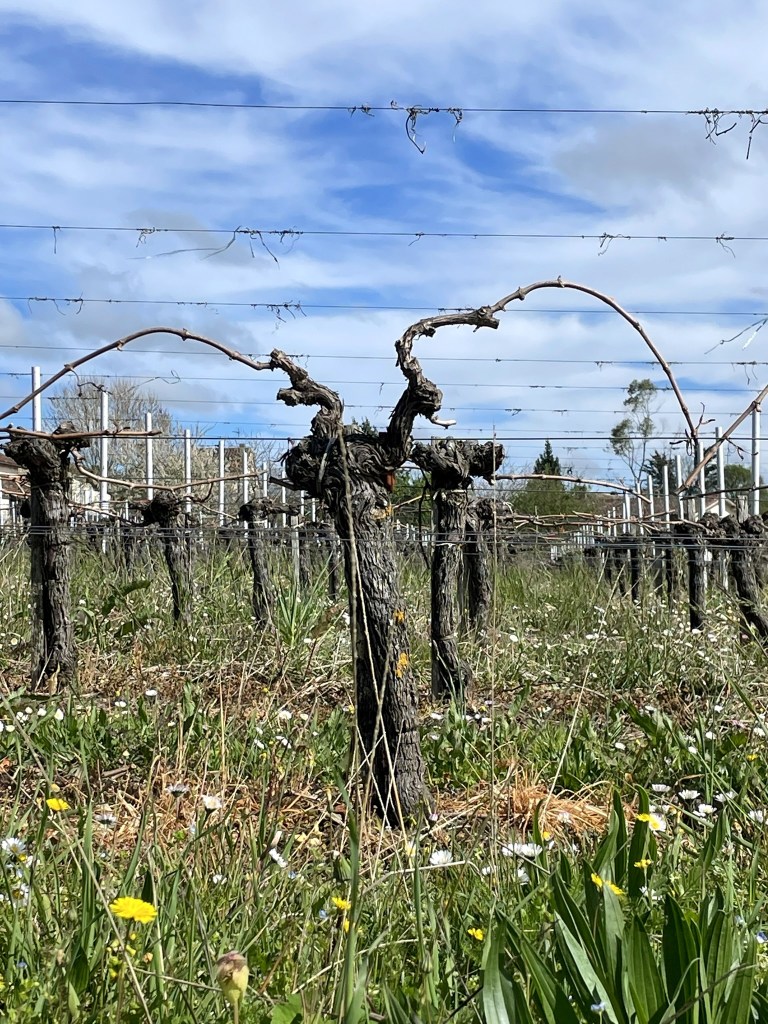
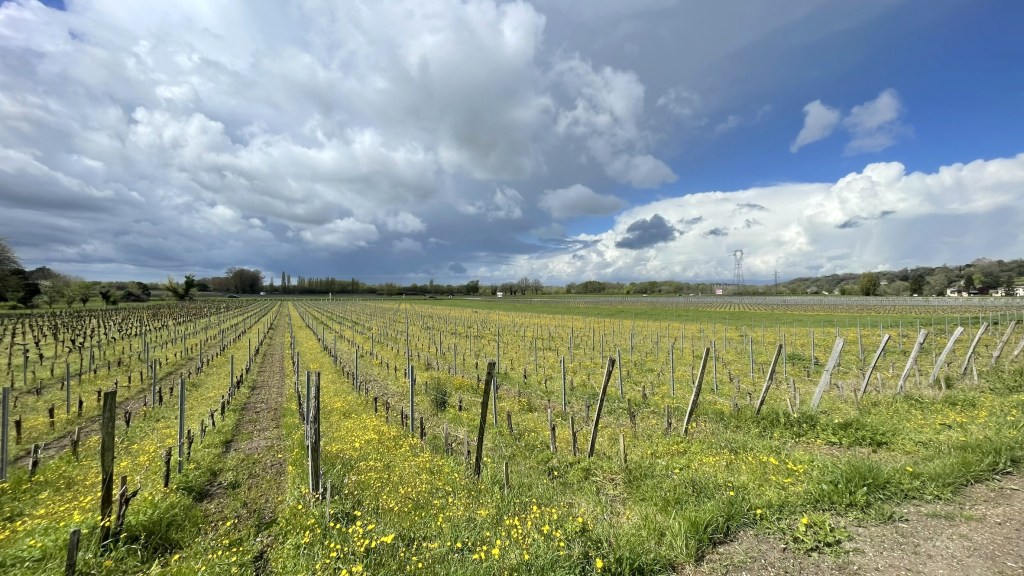
Staying in Saint-Germain-de-la-Rivière, we were surrounded by the everyday work in the vineyards. We saw people working in torrential rain to finish winter pruning. The vineyards don’t look too impressive at this stage… rows of gnarled brown stumps. But on closer inspection, the vines had emerged from winter dormancy and started budburst, when buds swell and open, and green shoots start to show. In 2021, budburst came early, due to very sunny weather in March, followed by severe frosts in early April, reducing yields across the entire Bordeaux region. Climate change is causing warmer early spring temperatures, which can easily be followed by a cold snap in April or even May, so the risk of frost is significant – especially for Merlot, which is an early-budding variety. This year, the rain during March led to flooding on flatter sites closer to the river. Waterlogging reduces the amount of oxygen available to the vine roots, slowing down growth. It also leads to compacted soils, making them difficult to work. The best vineyard sites are on well-drained slopes, but we saw a fair few hectares under water throughout Fronsac.

So where is value to be found on the Right Bank? First of all, look for the ‘next door’ estates or regions. For Saint-Emilion, try the satellites: Montagne-St-Emilion, St-Georges-St-Emilion, Puisseguin-St-Emilion and Lussac-St-Emilion. For Pomerol, try Lalande-de-Pomerol. These all have the advantage of having the ‘big name’ brand in their title. They produce some very good and outstanding wines without the premium prices of their famous neighbours.
The Côtes de Bordeaux appellation at least includes the recognisable ‘Bordeaux’ in its name. Its component appellations of Blaye, Castillon, Cadillac, Francs and Sainte-Foy are widely spread over the Right Bank and are generally not well known. Fronsac and Canon-Fronsac definitely fly below the radar.
The other approach is to look for the second wines (or third or fourth wines) of the big name châteaux. Over lunch, we had a very nice Esprit de Pavie at a very reasonable €6 a glass. This is Pavie’s third wine. There’s great value to be had by looking for ‘declassified’ wines that take a less prestigious quality level in order to have flexibility. For example, we tasted a delicious Blanc du Milieu made by Château Angélus, from Sémillon and Sauvignon Blanc grown in nearby Castillon, and labelled as IGP Vin de Pays de l’Atlantique. I just ordered a couple of bottles of keenly priced Black & Wine Blanc de Noirs, IGP Atlantique 2023 from The Wine Society out of curiosity: it’s a dry white wine made purely from Merlot grapes. It’s made by an association of 10 cooperatives, in response to prices for red grapes dropping below the cost of production.
Outside of Bordeaux, the same principles hold true. In Burgundy, good value can be found in the Mâconnais in south rather than the more famous Côte de Nuits, and ‘village’ wines can offer better value than the Crus. Instead of Champagne, try a Crémant de Bourgogne (made with the same grapes) or a Crémant from Alsace, the Loire or indeed Bordeaux.
In France, local supermarket whites and reds offered incredible value – you just have to make sure to buy from within the region, not outside it! Back home in the UK, several countries continue to offer excellent value: Portugal and Greece, Chile and South Africa.
Happy hunting!

 Terroir to the People: finding great value wine
Leave a comment