The Finger Lakes wine region is right at the top of New York State, just below Lake Ontario and not far from the Canadian border. Visiting at the end of April, it was still cold, with the vines looking similar to those in Bordeaux a month ago. It’s a continental climate with a short growing season and very cold winters… but it’s the bodies of water that make it possible to grow and ripen grapes here. This is going to be more of a travel blog than a wine blog, but first I want to talk about water. Bear with me…
The lakes are long and thin, but two of them – Seneca and Cayuga – are very deep. This means the water temperature changes much less dramatically than the surrounding land and air. (I remembered from school physics that water has the highest specific heat capacity of any liquid: 4,200 Joules per kilogram per degree Celsius, in case you’re interested). As I need to remember from my WSET Diploma wine course, this has four effects:
- Cold air drains down slopes to the water, whilst warmer air rises from the lake and draws cold air off the land;
- Lake-effect snow can help insulate vines in winter;
- Having heated all summer, lakes have a warming effect in autumn, enabling longer ripening and reducing the risk of autumn frosts
- Lakes have a cooling effect in spring, delaying budburst and reducing the risk of frost damage to newly formed buds.

There’s a really nice description of the terroir from the Boundary Breaks winery website here.
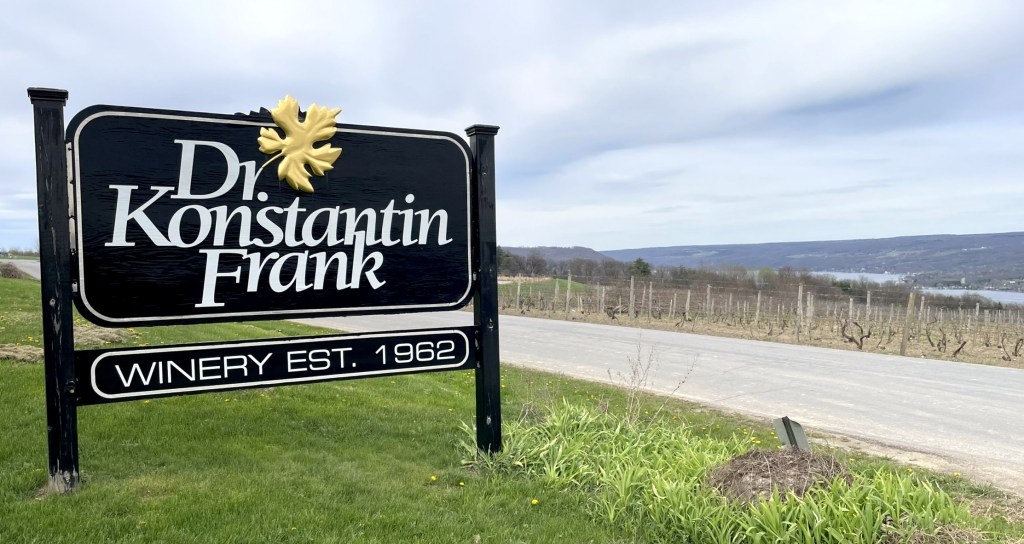
The first wine tasting we did was at the Dr Frank winery, where it all started. The region was considered too cold for European Vitis vinifera grape varieties, so was growing native North American grapes. Dr Konstantin Frank had been studying and growing Vitis vinifera in his native Ukraine. He moved to the US in 1951, with no money but bucketloads of determination – he sounds like quite a character. He successfully overwintered grafted Riesling and Chardonnay vines in 1957, and the winery opened in 1962. He is credited with sparking a revolution in Finger Lakes viticulture.

So what were the wines like? Intriguing for sure, and often delicious. Riesling and Cabernet Franc are important varieties – they are both winter-hardy and can ripen in this climate. I preferred the fully dry Riesling, with citrus, peach and pineapple flavours balanced by crisp acidity. The off-dry Riesling was also perfectly balanced, with a small amount of sugar to offset that zingy acidity. There were some lovely sparkling wines from Riesling, as well as from Chardonnay, Pinot Noir and Meunier (the Champagne grapes). The first pour of the Cabernet Franc was interesting… it’s very pale! Not like rosé, but more like a watered down red wine. It’s a pale variety, but still – it reminded me of the pale brown liquid we managed to get out of our hotel room coffee-machine, compared to a proper coffee. But it tasted delicious: raspberry and crunchy red cherry with something green (herbaceous notes) and spice from oak. There’s an ongoing debate about whether to oak these wines or not; we tasted beautiful examples of both styles.
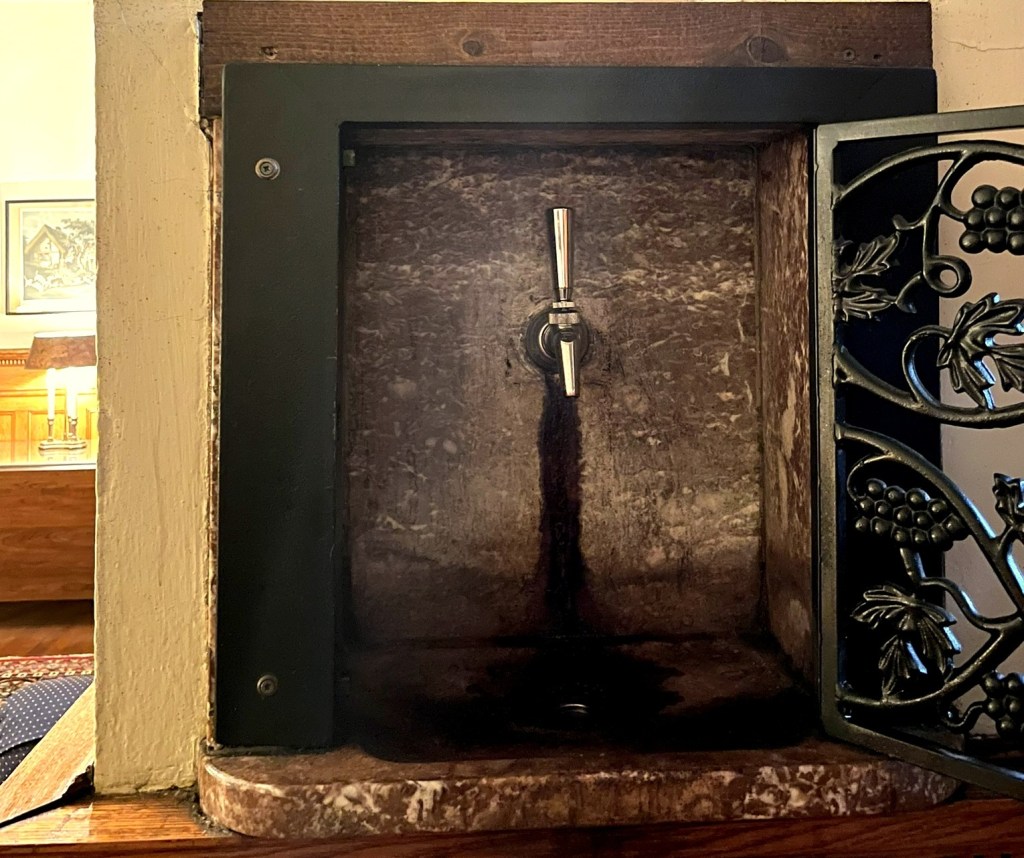
I wanted to spend one night at Belhurst Castle, purely because they have a wine spigot. There’s a little alcove on the first floor (outside our room, as it happened), with a tap where you can fill your glass as many times as you like. Which was once… they’re not stupid enough to put decent wine in there. But it is a fun gimmick in a very nice hotel, on the Seneca lakeside near to Geneva.


The wines I enjoyed most were at Knapp Winery, and not just because we’d met the owner by chance at a restaurant in Rochester a few days before. I loved the subtly oaked Chardonnay, and again the Cabernet Franc was sublime. Many of the wineries are experimenting with different varieties and have a broad range, including sparkling, whites, reds and rosés. The ‘Meritage’ Bordeaux blend at Knapp was excellent – though it’s quite a challenge to ripen Cabernet Sauvignon here. Boundary Breaks specialises in Riesling and we tasted lovely examples, from bone dry to sweet. It has an informative tasting room with stunning views over Seneca lake. A shout out to Barnstormer Winery across the lake, which specialises in reds and also gave us some very nice port to taste.
Buttonwood Grove Winery was an amazing place to stay. We were in the cosy ‘Cabernet’ cabin, and were treated to beautiful evening and morning light over the vineyards.


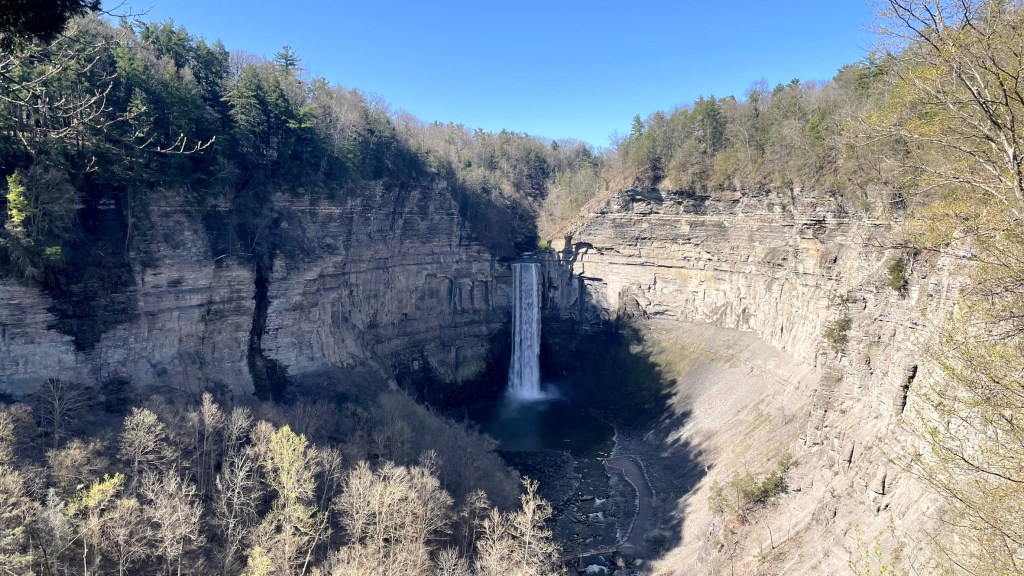
And coming back to the topic of water… there are some amazing waterfalls in the region. It’s well worth checking out Taughannock Falls and Watkins Glen in between wineries!


 Terroir to the People: finding great value wine
Leave a comment